Digital Experience Maturity: Building Organizational Readiness
Your people and culture are an important part of your digital transformation. Here’s how to gauge your organizational readiness.

Have you ever tried to bring data into your workflows, only to hit a wall because your organization isn’t set up for a data-first culture? Or maybe you’ve pushed for cross-functional decision making, only to face resistance and lack of adoption across teams?
Without the right people, culture, and leadership in place, even the best strategy falls flat. That’s where organizational readiness comes in.
This second pillar of our Digital Maturity Model measures the cultural and structural factors that enable truly data-driven decision making. It’s not just about having access to data—it’s about whether teams are empowered to use it, leadership champions it, and collaboration flows seamlessly across the organization.
If you’re struggling with low adoption, gaps in enablement, or a lack of executive sponsorship, your organizational readiness is holding you back. The good news? It’s fixable. Whether you’re just starting out or already have a strong foundation, here’s how to align your people and culture for success.
Key takeaways
- Organizational readiness is a measure of how well your employees understand the value of improving digital experiences and their ability to do so across departments.
- Businesses with a high level of organizational readiness will be able to successfully execute their digital experience strategies.
- Organizational readiness is critical to digital experience maturity because it breaks down silos and encourages collaborative, agile workflows.
- You can improve your organizational readiness by establishing a sponsor, building employee belief, promoting a data-driven culture, and driving adoption and accountability.
What is organizational readiness, and why does it matter?
Organizational readiness is what separates companies that talk about being data-driven from those that actually make it happen. It ensures employees understand the value of improving digital experiences—and more importantly, that they have the tools, support, and culture to put insights into action across the entire customer lifecycle.
At the core of high organizational readiness is a leader who drives a data-first culture. This champion doesn’t just talk about democratizing data—they ensure employees can access, share, and apply insights across teams. They rally the entire organization around a clear digital vision, breaking down silos and empowering employees at every level to contribute. And they make sure enablement isn’t an afterthought, providing the training and resources teams need to succeed.
The impact? Massive. The companies leading the way in digital experiences don’t just hope for cross-functional collaboration—they build it into their culture. They foster teams that continuously refine and improve every step of the customer journey. Without this foundation, even the best digital strategy falls apart, leading to slow execution, missed opportunities, and lackluster customer experiences.
Key areas of focus for organizational readiness
Organizational readiness isn’t something you can build overnight. Whether you’re starting from scratch or looking to maintain your organization’s data-first growth culture, here are four key areas to focus on.
1. Establish sponsorship
Digital experience maturity is both a top-down and a bottom-up initiative. You’ll need someone with authority—like VPs or heads of departments like growth, product, and marketing—to champion the cause.
Organizational readiness requires buy-in from employees who will need to change processes, learn new tools, and master novel modes of thinking. Changes like these are easier to implement when leaders model and incentivize this behavior.
Additionally, organizational readiness involves breaking down silos and building cross-functional workflows to share insights. Leaders can speed up this change by connecting teams and creating new channels where they can communicate.
An effective sponsor is someone who:
- Understands the strategic goals of the company and how to achieve them
- Is passionate about using data to drive results and improve digital experiences
- Can bring together different teams and roles for collaborative work
It’s helpful to have a sponsor who’s experienced in helping a workforce navigate a digital transformation, as they’ll be able to foresee and sidestep common roadblocks.
Best practice
Keep engagement high
A successful sponsor never misses a chance to tout their initiative and bring more people into the fold. Request to speak at All Hands and company-wide meetings, and come prepared with data and anecdotes showing how improving digital experience maturity can help everyone at the company.
Because sponsors don’t typically own the day-to-day changes or IT work, they should make time to talk with champions throughout the organization to stay current on the details. It’s your job to find problems before they get out of hand and to celebrate and publicize the wins your team’s work brings about.
2. Empower employees with data
If you want people to buy into your digital experience initiatives, show them the impact of their work. When employees understand how their efforts contribute to larger business goals, they’re more likely to stay engaged, take ownership, and drive meaningful results.
To make data a true driver of accountability, define a few key metrics that directly tie back to your organization’s vision—avoiding vanity metrics that don’t influence real outcomes. Keep these metrics front and center by reviewing them in every team meeting, discussing progress, and using them as a learning tool. A UX designer who spends two sprints overhauling your payment flow should see how their changes affect purchase completions. A digital marketing team should know how their latest campaign impacted cart conversions.
Encourage a culture of data-driven decision-making by making insights easily accessible. Implement self-serve data tools so employees can track results in real-time, measure their impact, and adjust strategies accordingly. The goal isn’t just to collect data—it’s to ensure it fuels motivation, informs decisions, and keeps teams aligned on what truly matters.
Best practice
Tie it back to organizational impact
People love making numbers go up, but gaming stats isn’t useful for growth. Good data motivates continuous learning and improvement by showing employees how their work makes a difference to customers—and the bottom line.
When you introduce your team to the data, talk about why the metrics you’re looking at matter. And encourage employees to bring context to the data. Simplifying the free trial enrollment may have decreased your bounce rate, but what percentage of trial users convert to paid subscribers?
Encouraging employees to ask these questions will support a culture of open-mindedness and experimentation. It’s also a great chance to foster alignment and collaboration, so teams aren’t drawing different conclusions from the same numbers.
3. Promote a data-driven mindset
Once teams buy into your digital experience mission, the next step is helping them make data-driven decisions. This can be a big change, especially for organizations with historically low levels of data democratization.
Start by rolling out a company-wide digital analytics platform like Amplitude and giving teams the tools to answer their own questions. The best companies make ongoing learning easy, whether it’s through a dedicated Slack channel, regular office hours with an expert, or hands-on workshops.
But access alone isn’t enough—you need to actively foster a culture where data drives both decisions and business outcomes. Encourage teams to share how they’ve used data to make key decisions through knowledge-sharing sessions, where peers present insights and the actions they took based on them. Create organizational accountability by having a central data team measure how different departments are leveraging data and setting expectations with leadership.
Embedding data into everyday workflows increases the velocity of innovation and strengthens your competitive advantage. When marketing pitches a new loyalty program, they should back it up with insights from past campaigns. When the product team debates which bug to fix first, they should prioritize based on usage data. The more teams rely on data to guide their actions, the more it becomes second nature—and the faster your digital experience strategy moves from theory to reality.
Best practice
Recognize and reward buy-in
Changing how your teams work is a big ask, and the more you recognize this, the better your efforts to build a data-driven culture will go.
Monetary bonuses, prizes, and public recognition are excellent incentives for employees embracing a data-driven mindset. Even small improvements, like data that answered a long-standing question about customer behavior or a new dashboard that made a process 50% faster, are worth recognizing. Publicly acknowledging these wins in team meetings helps cultivate champions who strengthen their peers’ skills and beliefs.
4. Drive adoption and accountability
Once your organizational culture is primed to improve digital experiences with data, it’s time to push for everyone to join in. That doesn’t mean ending support for legacy tools and processes, but getting the most change-resistant employees on board will take effort.
Continuing education supports adoption efforts: It takes time to internalize a new mindset and learn new tools. Make sure employees have access to relevant enablement resources to help.
Once everyone has the tools and training to switch to new data-driven workflows, it’s time to build an accountability framework. It may help to collaborate with those who are holding out: You can set a deadline for the transition but give each individual the chance to plan their own adoption timeline.
Then, it’s up to you to implement and enforce the new framework. This may mean regular check-ins to see how well employees are adapting. Questions are normal, and setbacks are expected—so be ready to tackle them to keep things moving forward.
Best practice
Tailor training and enablement
One risk of training at scale—which you’ll likely do when implementing a company-wide program—is overloading individuals with information and turning them off the project or tool. Instead of asking, “How can I teach 1,000 people to use this tool in the shortest time?” ask, “How can I teach 1,000 people to use this tool effectively?”
While a company-wide tutorial may be a sensible first step, pair it with role-specific training that focuses on relevant topics and features. Successful programs often include a practical element, where you take a common question or project and help employees find the answer or create an output using the new tool.
After the initial wave of training, maintain the same strategy with your continuous learning opportunities. Whether it’s through lunch-and-learns or webinars, tailor programs to specific roles and use cases.
How ready are you for change?
Having a vision is only the first part of navigating a successful digital transformation. Every employee in your company must be on board with making the changes necessary to achieve digital experience maturity. Having a culture that supports exceptional digital experiences is just as important as having the tools that enable it. With a committed sponsor to lead the adoption of new data tools and practices, you’ll be on your way to greater organizational readiness.
See where your organization stands with our digital experience maturity assessment. This quiz will analyze how your company performs across the four pillars of digital experience maturity—including organizational readiness—and provide tailored advice to help you improve.
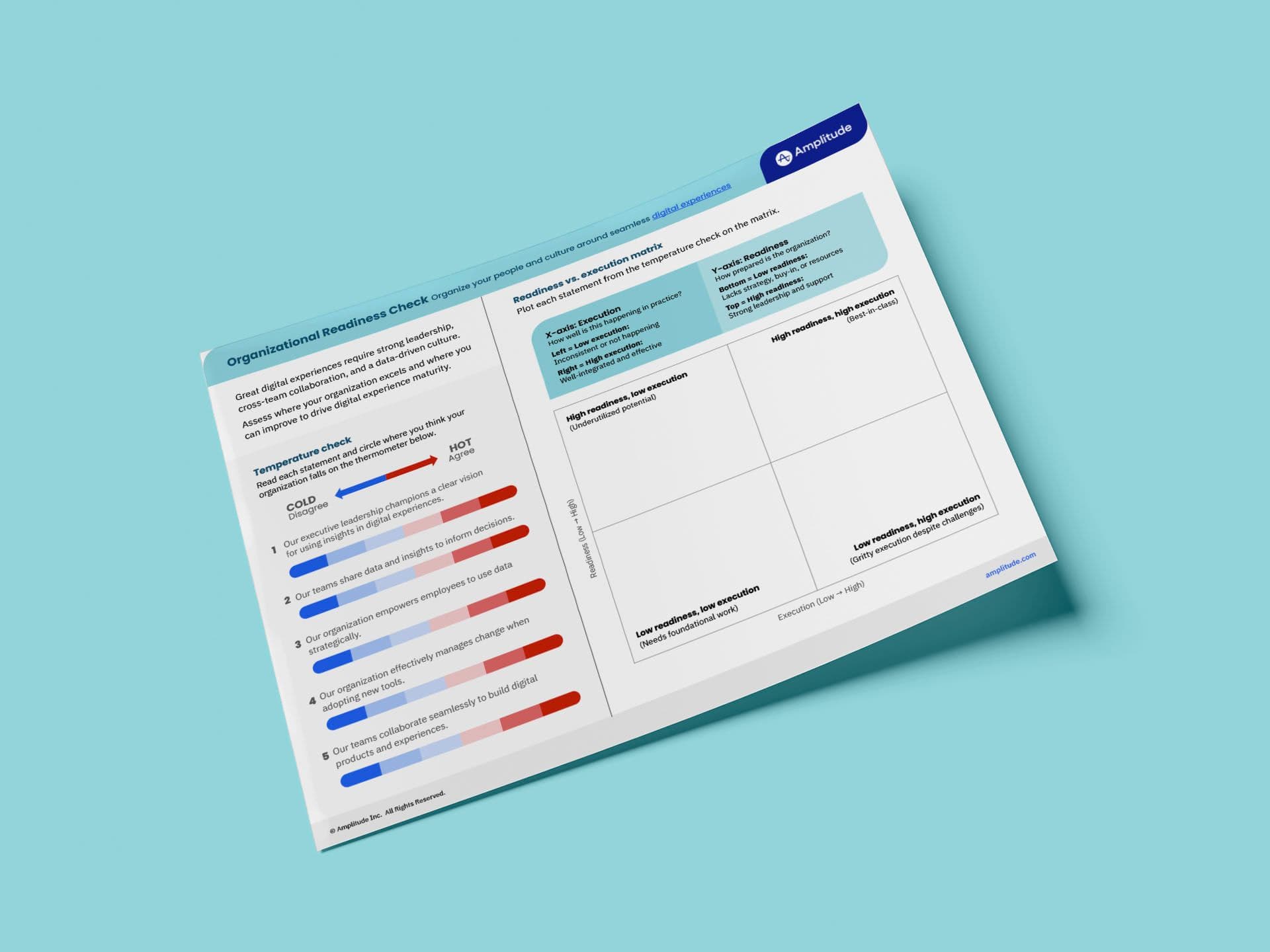
Pair the digital experience maturity assessment with the organizational readiness worksheet.

Jenna Elliott
Vice President of Global Customer Success, Amplitude
Jenna Elliott is Vice President of Global Customer Success at Amplitude, where she ensures that customers are successfully implemented and drive business outcomes. She previously built Professional Services organizations at Narvar and Castlight Health.
More from Jenna


