Agent connectors are better together
How people across Amplitude use one agent to work across the tools they already have, in a single prompt.

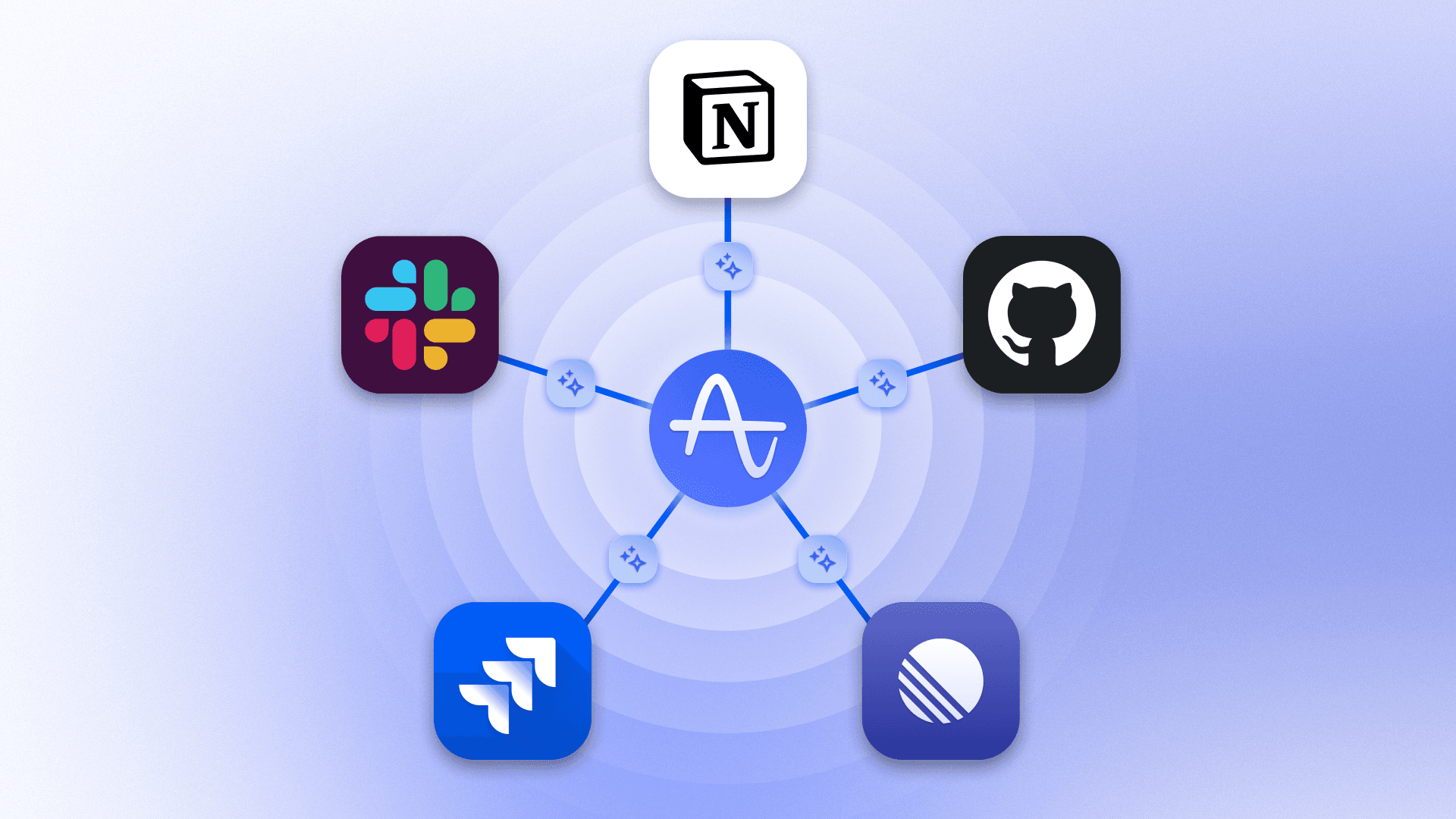
Most people set up an AI agent connector and figure the work is done once data moves from one tool to another. But imagine this very common scenario: you spot a drop-off in a funnel, open your session replay tool to see what users did, switch to GitHub to find the bug, then paste a summary into Slack so the right engineer sees it. Every step is a new tab and another copy-paste, and the finding gets more fragmented each time you move it.
Power users here at Amplitude know agent connectors don’t work that way. They let one agent read from one tool, work through the problem, and act in another tool, all from a single prompt.
Tap the power of all your tools, without leaving your workflow
With Agent Connectors, you access all your tools from the same chat. In practice, it might look like this: a single agent reads from your session replay data, cross-references the codebase, and posts to Slack without you switching tabs. You ask once, and the agent moves through all three tools while you stay in the same workflow.
Amogh Dikshit, AI Engineer, uses Agent Connectors to run bug investigations. He starts with session replay data to find where users fell off, then has the agent cross-reference the JavaScript error or failed API call against the codebase to find the likely cause. The agent then posts the write-up into the right Slack channel so the engineer who owns that code sees it. He asks once, and never opens session replay, GitHub, or Slack himself.
Send insights to multiple places
Findings like the ones Amogh uses Agent Connectors to surface are typically recorded in a doc and work tracker. That’s why Agent Connectors sends them to every system that needs them, all from a single prompt.
It’s one of Principal Product Designer Jingshu Zhao’s favorite features. She knows she can count on her agent to update Confluence or Notion and file the Jira ticket at the same time, keeping product and engineering on the same page.
Post a finding straight to a Slack channel
The best part? After your agent digs into the data, it drops a summary of its findings in the channel of your choice. AI Engineer Ram Soma runs it this way, knowing the result lands where his team is working.
Run your agent on a schedule
You can go beyond one-off queries too. Schedule your agent to automatically monitor dashboards and act when something moves. Want an example? Your agent can check a metric, post results to Slack, and file a ticket the moment a number regresses.
Stephanie Chu, Software Engineer, has agents monitor dashboards and post results to Slack. When a metric regresses, the agent files a Linear ticket so it becomes tracked work right away. Steven Cheng, Senior Engineering Manager, runs his on tighter cadences, some as often as every 15 minutes. When a number looks off, the agents create tickets automatically, eliminating the manual work of spotting a problem and opening a ticket.
Access data from one place
Agent Connectors open a door to data that lives in many systems. It means that instead of opening four tools to answer one question, you can ask your agent and it pulls the answer from wherever it lives.
Whenever Principal Product Designer, Fayyaz Mukarram has a question, he starts with his agent. When he’s running an experiment, he has the agent list feature flags or where he's assigned as a tester. The agent then pulls that information from across the systems that hold it.
What changes when the agent does the moving
Agent Connectors help remove the bottleneck in the build-ship-analyze-learn loop. Innovations in digital analytics made finding the number or metric that mattered something you could do in minutes. But the tab switching, the copy-and-pasting, and the handing off to the next tool slowed everything down. When the agent does that work—the investigation, the write-up, the ticket, and the message—it means you can learn and iterate as fast as you build and analyze.
Here at Amplitude we’ve seen firsthand the power of Agent Connectors. It’s not merely about how many tools we’ve connected, but what we’ve asked the agent to do with themConnecting your tools is the setup. Putting one agent to work across them is where the real value lives.
Frequently asked questions
What is an agent connector? An agent connector links an AI agent to a tool you already use, like session replay, GitHub, Slack, Jira, Confluence, or Notion. Once connected, the agent can read data from that tool and take actions in it on your behalf, so you can work across several tools from a single prompt instead of switching between them.
Can one agent work across multiple connected tools at once? Yes. A single agent can read from one connected tool, reason over the result, and act in another within the same prompt. For example, it can pull session replay data, cross-reference a code error in GitHub, and post the write-up to Slack.
Can an AI agent run on a schedule without me watching it? Yes. A scheduled agent can monitor a dashboard on a set cadence and act when a metric moves. When a number regresses, it can post to Slack and file a ticket in Linear or Jira automatically.
What's the difference between connecting a tool and using agents across tools? Connecting a tool moves data from one place to another and saves you a single step. Using an agent across tools hands off the whole task: the agent reads, reasons, and acts across several connected tools from one prompt.

Michele Morales
Group Product Marketing Manager, Amplitude
Michele Morales leads Partner Product Marketing at Amplitude, driving ecosystem-led go-to-market strategy across AI, agency, and cloud data partners.
More from MicheleRecommended Reading

Your agent isn’t broken. It’s guessing.
Sep 23, 2026
6 min read

Bring headless Amplitude where you work
Sep 16, 2026
3 min read

Should I install the Amplitude SDK?
Sep 15, 2026
4 min read

Amplitude climbs to #3 in G2 Digital Analytics Momentum
Sep 15, 2026
10 min read